Data Classification
Data Classification
Classify your data first to optimize storage costs and maximize data value.
Data classification brings insights to unstructured data so you can manage data over its lifecycle. It allows departmental users to easily find and move the precise data sets needed for projects. Komprise Intelligent Data Management with Deep Analytics analyzes metadata and allows for additional enrichment and tagging of data.
Data tagging is a core feature in Komprise Intelligent Data Management. Tagging adds additional metadata to your file data in the form of key value pairs. These values give context to your data, allowing it to be easily found or associated with a project, study, or classification.
How does Komprise analyze system metadata?
Storage system-generated metadata includes time of creation, author, file size and type and when it was last accessed or modified. Komprise indexes this metadata across all unstructured data so you can classify data as “cold” or by file type or project/department. By entering your current storage costs and new storage projected costs, Komprise can show savings of moving cold or warm data to lower-cost storage for infrequent access.
How does Komprise enrich metadata?
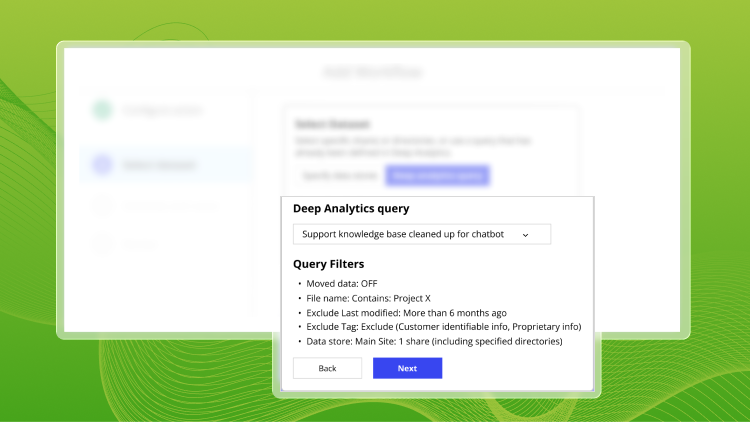
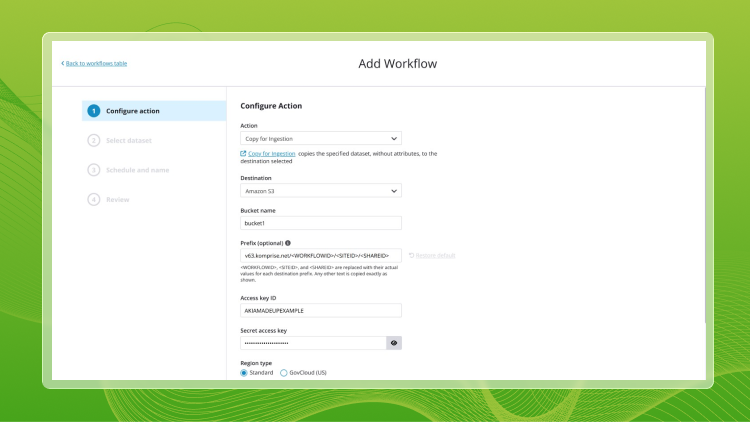
For additional unstructured data classification, Komprise allows users to easily tag groups and directories of files with new metadata (such as project name). Komprise connects with third-party AI and ML tools which crack open file contents to search for keywords or data types, such as sensitive personal identifiable information (PII). Creating a Smart Data Workflow in Komprise can automate the process of sending data sets to an AI tool and tagging the results.
What are common uses cases for unstructured data classification?
Komprise delivers a fast, automated and accurate method to classify and segment data for a variety of use cases. Identify and move PII and other regulated data to secure locations, satisfy requirements for eDiscovery and audits, find and delete duplicate and orphaned data, and tag and move the right data sets to data lakes and AI tools.
![]()
What is data classification?
Data classification is the process of organizing data into tiers of information for data organizational purposes. Komprise has always focused on delivering analytics-driven unstructured data management. Know First. Move Smart. Take Control.
What Is the Role of Data Classification in Unstructured Data Management?
- Providing visibility: Helps IT teams understand what data exists across silos of file and object storage.
- Improving governance: Ensures sensitive or regulated data is properly tagged, protected, or excluded from certain workflows.
- Optimizing costs: Identifies inactive, duplicate, or low-value data that can be tiered to cheaper storage or deleted.
- Enabling efficiency: Makes it easier to search, access, and deliver relevant data to departments and lines of business.
Data classification is the foundation for managing unstructured data at scale, turning raw, unorganized files into actionable datasets.
What Role Does Data Classification Play in AI Data Preparation?
- Curate relevant datasets: Filter out noise, duplicates, or outdated data so AI models are trained on information that improves accuracy.
- Enrich context with metadata: Adds tags and attributes that make unstructured files searchable, queryable, and meaningful for AI services.
- Strengthen compliance and governance: Ensures that sensitive or restricted data is excluded from AI workflows, reducing risk.
- Accelerate data delivery: Speeds up AI data preparation by pre-sorting massive datasets into useful subsets before migration or processing.
By classifying unstructured data upfront, enterprises avoid the cost and risk of dumping messy, unfiltered data into AI systems, delivering higher-quality, well-governed inputs that improve AI outcomes.
What is Komprise Deep Analytics?
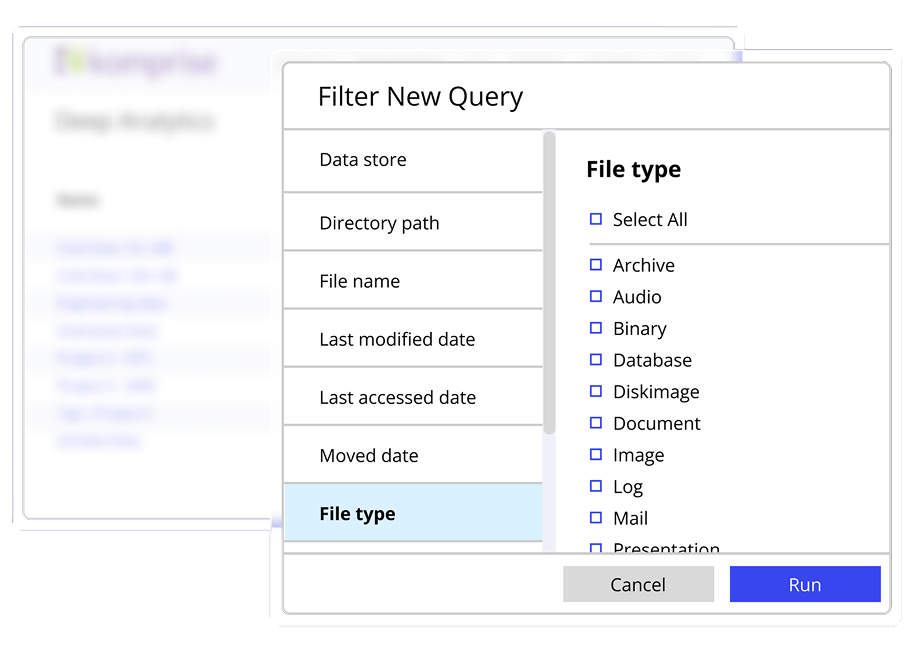
Finding just the right data across billions of files can be challenging. Komprise Deep Analytics enables you to search and find data that fits your specific criteria across storage. Use the search results, called the Global File Index, as a dynamic data lake to both plan unstructured data management and mobility as well as to enable new uses such as AI and big data analytics.