Proven tactics to counteract exploding storage costs, ransomware threats and energy constraints
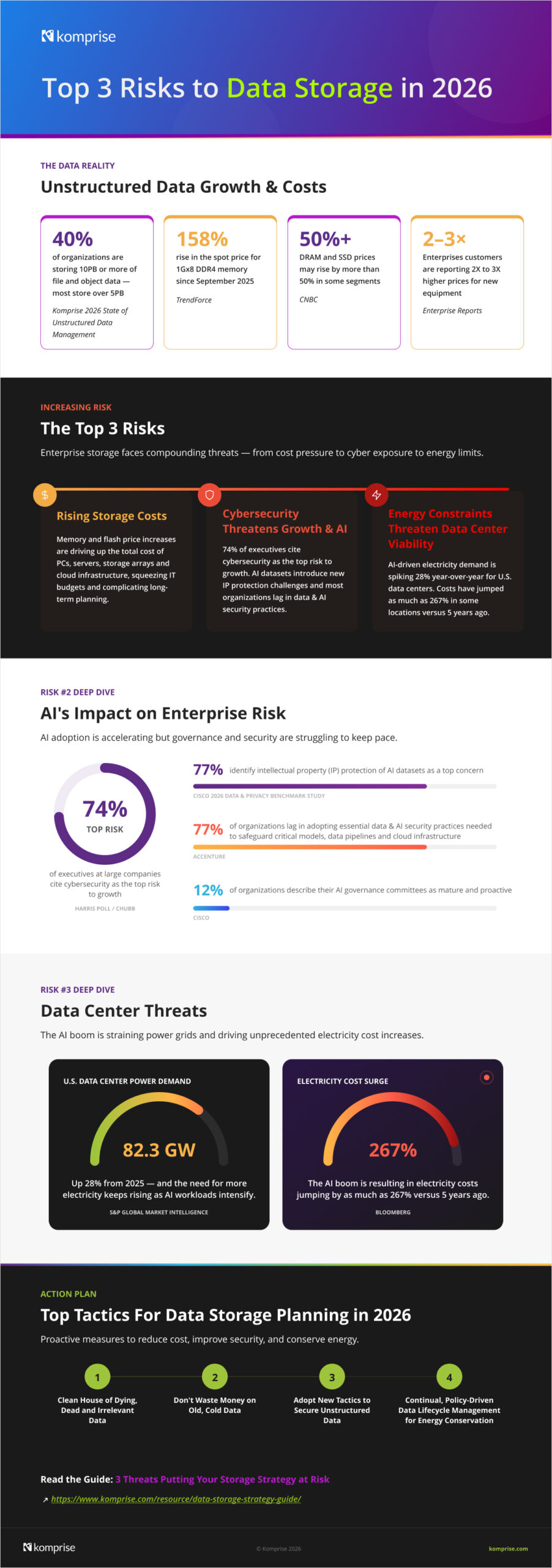
Unstructured data is growing faster than ever and in 2026, the pressures around storing it have never been more acute. Global supply chain shortages have driven DRAM and SSD prices up by 50–100% or more. Ransomware groups are targeting multi-petabyte storage and backup systems. Surging AI workloads are pushing data center energy costs up 28% year-over-year.
Read this guide to review:
- How to identify and tier 70–80% of cold data to low-cost archival storage without disrupting user access or incurring rehydration costs.
- Why ransomware attackers target unstructured data and how immutable object storage helps reduce risk.
- Why metadata enrichment and unstructured data classification are critical to protecting IP, PII and PHI before data enters AI pipelines.
- How automated data lifecycle management policies lower energy consumption and reduce data center cooling costs.
What are the biggest data storage risks organizations face today?
Common storage risks include rising capacity costs, ransomware exposure, uncontrolled unstructured data growth, vendor lock-in, failed migrations, poor data visibility, and keeping inactive data on expensive primary storage. These risks can increase costs and slow innovation.
Why is unstructured data now a top storage risk?
Unstructured data such as files, documents, images, and video is growing faster than many IT teams can manage. Without visibility into ownership, age, duplicates, and access patterns, organizations often overspend on storage and struggle to support AI, compliance, and security initiatives.
How can organizations reduce storage costs without buying more hardware?
Many enterprises can reduce costs by identifying inactive or cold data and tiering it to lower-cost cloud or object storage, instead of expanding premium NAS or flash capacity. This also lowers backup and disaster recovery costs.
How does Komprise help reduce storage risk?
Komprise helps organizations analyze unstructured data across storage silos, identify risk and waste, tier cold data transparently, accelerate migrations, improve ransomware resilience, and provide showback reporting to guide smarter decisions.
Why should storage leaders care about data storage risks now?
Rising flash prices, flat budgets, rapid data growth, and new AI demands are forcing IT teams to do more with existing infrastructure. Proactively addressing storage risks can free budget, reduce complexity, and prepare valuable data for AI and analytics.